Treating Facial Redness Part 1: Flushing vs. Rosacea
Learn the key differences between flushing and rosacea, including causes, subtypes, disease progression, and treatment goals, explained by a Dayone Clinic dermatologist.

It has been a while since the last Doctor's Column.
Today I would like to write about facial redness treatment — a topic that is by no means straightforward.
For some time now, the purpose of these Doctor's Column posts has been largely to organize my own thoughts, so the content may be somewhat technical for readers without a dermatology background. I want to clarify upfront that this post is written for my own reference. :D
First of all, before treating facial redness, it is essential to determine whether the condition is simple flushing or rosacea.
Patients who come to the clinic concerned about a red face should be aware that their condition could be either simple flushing or a disease called rosacea.
1. Flushing
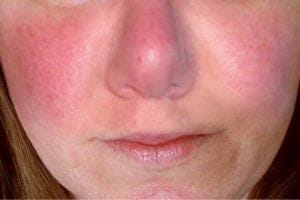
- Flushing refers to reddening of the face in response to various physiological stimuli.
- It can be aggravated by a number of triggering factors, and it is therefore advisable to avoid those triggers as much as possible during treatment.
- Common aggravating factors for flushing include alcohol consumption, emotional changes, caffeine, and sudden temperature changes. Certain medications and endocrine disorders can also worsen flushing.
2. Rosacea
- So what exactly is rosacea?
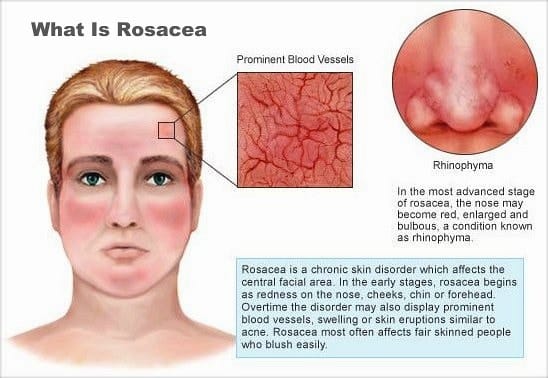
- Rosacea is defined as a "long-term skin condition characterized by facial redness, small and superficial dilated blood vessels on the facial skin, papules, pustules, and swelling." In simple terms, it can be thought of as flushing to which an inflammatory response has been added.
- The exact cause of rosacea has not been fully established, but like simple flushing, it can be aggravated by alcohol, emotional changes, caffeine, temperature changes, and medications.
- Drug-induced rosacea is particularly important to note: it can be triggered by topical agents used for acne treatment as well as topical corticosteroids. (This is why consulting a physician is essential before using steroid ointments or acne creams.)
3. Pathophysiology of Rosacea
1. Vasodilation
2. Dermal matrix degeneration
3. Chronic inflammation (perivascular vs. perifollicular)
4. Increased free radicals
5. Increased VEGF → leading to proliferation of blood vessels themselves
4. Classification of Rosacea: 4 Subtypes
(1) Erythematotelangiectatic rosacea
- Erythema with flushing
- Telangiectasias
(2) Papulopustular rosacea
- Redness accompanied by papules and pustules
- Frequently confused with acne
(3) Phymatous rosacea
- Associated with rhinophyma, commonly known as a "bulbous nose," which in this case requires ablation with a vascular laser.
(4) Ocular rosacea
- Vascular dilation and inflammation around the eyes, with dryness and eye itching as the main symptoms
- Must be differentiated from periocular atopic dermatitis.
5. Disease Progression of Rosacea
- When rosacea first develops, severe presentation from the outset is rare. It is a progressively worsening condition, so early detection and early treatment are important.
- The progression of rosacea follows this course:
"Pre-rosacea stage (facial flushing) → Vascular rosacea stage (erythema, telangiectasia) → Inflammatory rosacea stage (development of papules, pustules, nodules) → Late rosacea stage (repeated inflammation… rhinophyma)"
Diagnosis is made clinically.
6. Goals of Rosacea Treatment
- Because rosacea is a chronic condition, it is important to clarify the goals of treatment from the start.
- It is not a condition that can be completely cured. Treatment achieves temporary remission, and long-term management is therefore necessary.
- Ultimately, the goals of treatment are to reduce redness and to decrease the inflammatory response.
That is all for this post.
The specific treatment methods for rosacea will be covered in the next post. ^^