Struggling with Dry Skin? What You Should Know About Hyaluronic Acid Injections
Learn why dry, rough skin occurs and how hyaluronic acid (HA) injections target the dermal layer directly to improve skin hydration, texture, and radiance.
As the weather turns cooler, many people find themselves battling dry skin.
Some experience a persistent tight, parched feeling deep within the skin despite applying moisturizer after moisturizer, while others struggle with rough skin texture caused by dryness.
So what actually causes rough, dry skin?
To understand this, it helps to first take a look at how the skin is structured.
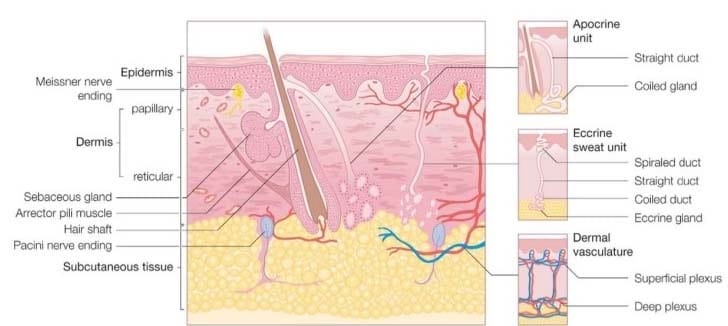
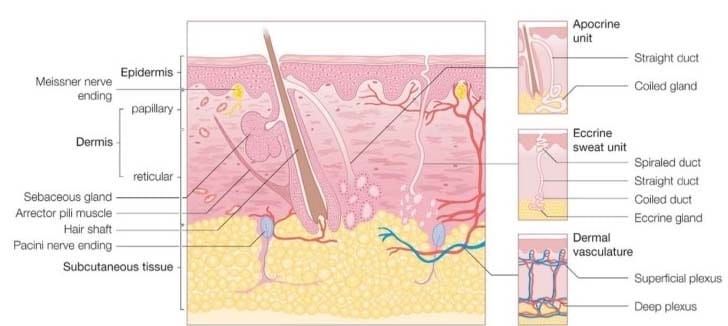
Our skin is made up of the stratum corneum, the epidermis, the dermis, and the subcutaneous fat layer beneath. Because of the skin barrier, it is very difficult for topical skincare products to penetrate all the way down to the dermis — no matter how expensive or highly regarded those moisturizing creams or serums may be.
In other words, there is a limit to what skincare products alone can do when it comes to improving the condition of the dermis.
Yet the dermis is the most important layer of the skin.
The dermis is composed of collagen, elastin, and hyaluronic acid (HA), among other components. Collagen, which makes up the largest proportion, plays a key role in skin elasticity and moisture retention. Hyaluronic acid (HA) has the property of attracting and holding water, making it a critical component for maintaining skin hydration.
Many skincare products advertise that they contain HA, but as explained above, it is essentially impossible for these ingredients to reach the dermal layer through topical application.
So what options are available for increasing the proportion of hyaluronic acid in the dermis in order to achieve softer, more hydrated skin?
A few years ago, a treatment known colloquially in Korea as "water glow injections" (mul-gwang injection) began gaining attention — partly because it became widely known that celebrities would receive these injections before public appearances, noting a noticeable improvement in overall facial radiance and hydration. This treatment is, in essence, a hyaluronic acid (HA) injection.
By injecting hyaluronic acid directly into the dermis, this treatment increases the concentration of HA in the skin, helping it retain more moisture and achieve a more hydrated appearance. It is one of the most straightforward and direct approaches available.
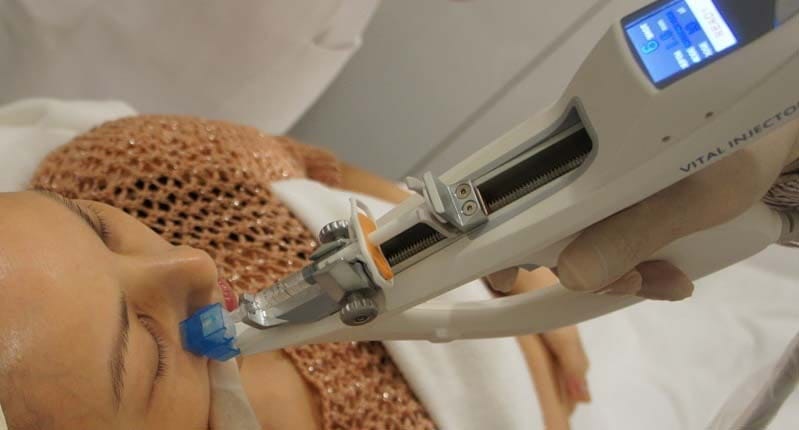
While the injection can be administered by hand, a specialized injection device is often used to deliver a uniform amount across the entire face more effectively. Our clinic uses the Restylane Vital Injector, which is among the higher-end devices available in its category — offering a high standard of hygiene and allowing for precise, consistent delivery with minimal product loss.
In most cases, a topical anesthetic cream is applied for approximately 30 minutes beforehand, after which the Vital Injector device is used to administer the treatment. Discomfort during the procedure is generally mild — most patients describe it as a slight stinging sensation.
When hyaluronic acid is injected directly into the dermis, the most noticeable early improvements are typically a reduction in dryness and a smoothing of rough skin texture.
For approximately one week following the procedure, some patients may notice that their skin feels slightly drier than usual due to a temporary inflammatory response. After that initial period, most people begin to notice their skin feeling more hydrated from within, with the sense of dryness diminishing considerably. An improvement in overall skin tone and brightness is also commonly observed.
(Patients who have a relatively low baseline level of hyaluronic acid in their dermis may notice more modest results initially. However, with repeated treatments or higher doses, results tend to accumulate and become more pronounced over time.)
Recently, because some patients have reported finding the effects of standard-dose treatments less noticeable, double-dose hyaluronic acid injections have become more common. Based on clinical experience, increasing the dose tends to produce more consistent and visible results, and the effects also tend to last longer. For this reason, higher-dose hyaluronic acid injections are now frequently recommended.
Patients who have undergone the treatment often describe their experience in similar terms — noting that their skin no longer feels tight after washing their face, even without applying lotion, and that their complexion appears to have a natural luminosity.
The images below are taken from a paper published in a dermatology journal.
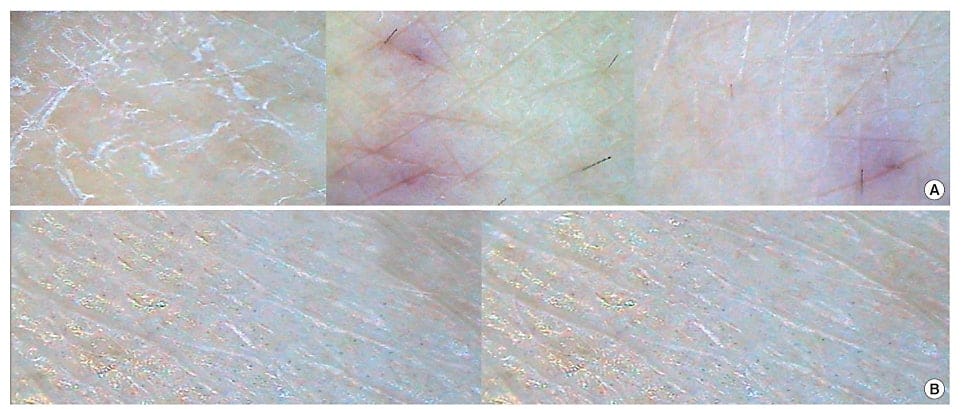
These are microscopic photographs taken before and after hyaluronic acid injection treatment.
Even under magnification, the images show a visible improvement — the rough skin texture appears smoother and more refined following the treatment.
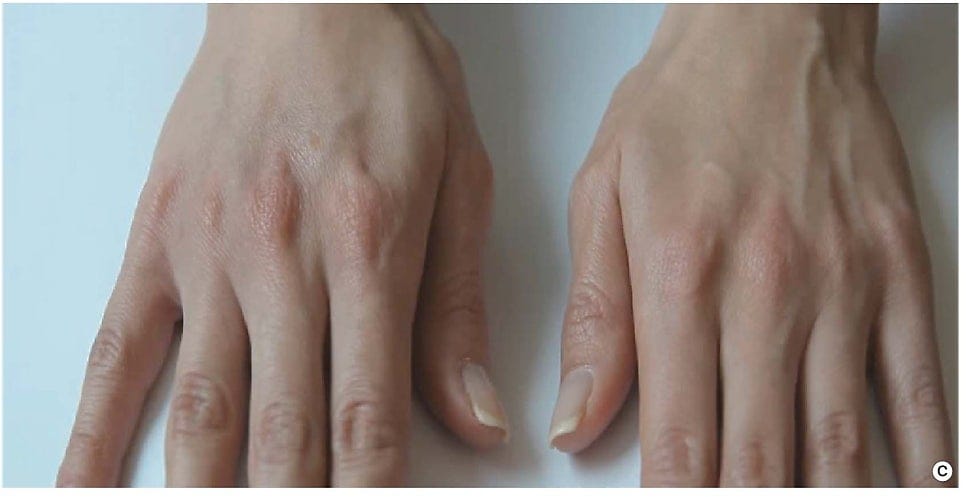
In this photograph, one hand received hyaluronic acid injections while the other hand received no treatment.
The left hand in the photo (the patient's right hand) is the untreated control, while the right hand in the photo (the patient's left hand) is the side that received the injection.
The treated side shows not only improved skin texture but also a visibly more toned, radiant appearance with an overall brighter skin tone.
The same principle applies when the treatment is performed on the face.
Because hyaluronic acid is injected directly into the dermal layer, this approach provides a direct and precise way to increase the skin's moisture content. Skin elasticity and overall complexion tend to improve as well.
The injected hyaluronic acid is naturally absorbed by the body over time, which means there is no concern about foreign body reactions, and the treatment works with the skin's own biology.
One potential side effect to be aware of is the "embossing effect," where the hyaluronic acid may appear to clump or create uneven bumps under the skin. This tends to occur more commonly when the injection is administered by hand rather than by device, and is generally caused by too much product being deposited in one area or by the injection being placed too superficially. If this occurs, gently pressing on the affected area can often help, and the product will typically be absorbed naturally over time — so there is usually no need for significant concern. However, if visible irregularities persist after about one month, dissolving the hyaluronic acid with hyaluronidase may be advisable.
For anyone experiencing persistent skin tightness or dryness as the weather cools and indoor air becomes drier, a higher-dose hyaluronic acid injection treatment may be worth considering.
No matter how effective a skincare product is, or how frequently you visit a skin care clinic, topical treatments simply cannot deliver hyaluronic acid to the dermal layer. The only way to increase HA levels in the dermis directly is through injection. :D